
Getting started
- MIT: the birthplace of interactive computing and hacker culture.
- Digital Equipment Corporation: the company that reshaped the minicomputer industry.
- The PDP-1: a foundational machine in the development of interactive computing.
- The PDP-8: the minicomputer that broadened access to technical computing.
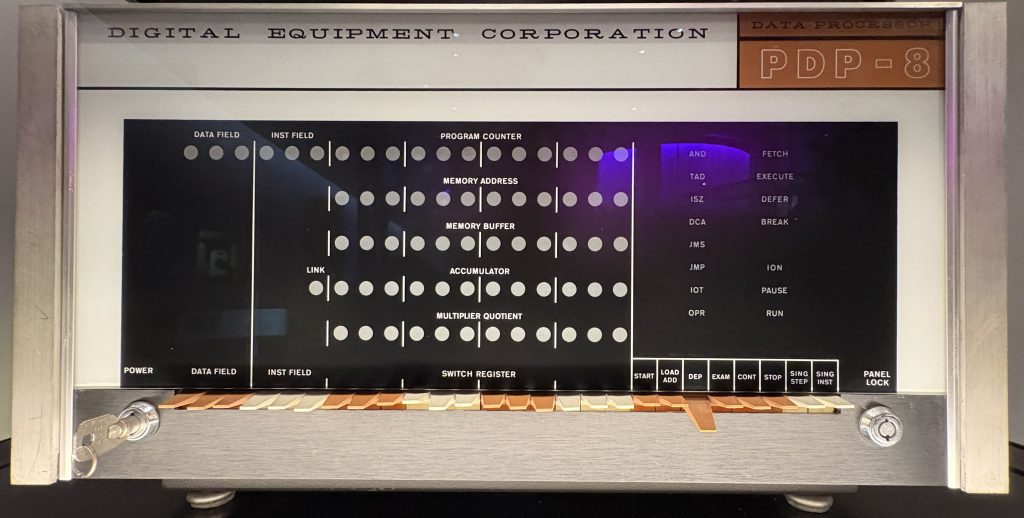
Explore the history of computing
Computers and architectures
The site explores the computers and calculating machines that defined their eras. Discover mainframes, minicomputers, and microcomputers.
Each article examines a machine’s architecture, components, peripherals, uses, and influence on the systems that followed.
Systems, languages, and tools
The site also features articles on programming languages, operating systems, assemblers, and compilers.
These articles explore how programmers gradually learned to communicate with computers, from binary machine code to high-level programming languages.
Peripherals, memory, and storage
The history of computing is not limited to central processing units. The site therefore gives an important place to peripherals, memory technologies, and storage media.
Punched tape, magnetic-core memory, terminals, displays, keyboards, and disks all played a crucial role in making computers practical and usable.
People, laboratories, and companies
Particular attention is given to the women and men who built this history: scientists, engineers, inventors, entrepreneurs, and programmers.
The site also explores the companies, universities, and laboratories where major innovations emerged. These environments fostered not only the development of new machines, but also the growth of distinctive technical cultures.
Articles to discover
- The Flexowriter: a pivotal machine connecting the typewriter, punched tape, and the computer.
- Dennis Ritchie: creator of the C programming language and a key figure in the development of UNIX.
- Richard Greenblatt: MIT programmer and pioneer of artificial intelligence.
- Alan Kotok: a prominent figure in MIT hacker culture and a contributor to Spacewar!
The innovations we often overlook
The history of computing is also shaped by less conspicuous but decisive innovations. A hardware constraint can lead to an elegant solution. An optimization can transform a system. Likewise, a new interface can profoundly change the way people use computers.
The site therefore pays particular attention to technical choices that may appear modest at first sight but proved essential to the evolution of computing. They help us understand not only the machines themselves, but also the ways in which people learned to use and appropriate them.
About the author
I have been a computer science teacher for nearly 25 years and have been passionate about the history of computing since my teenage years. This website extends both that long-standing interest and my work as an educator.
My aim is to make the history of computing clear, rigorous, and accessible without sacrificing technical accuracy.
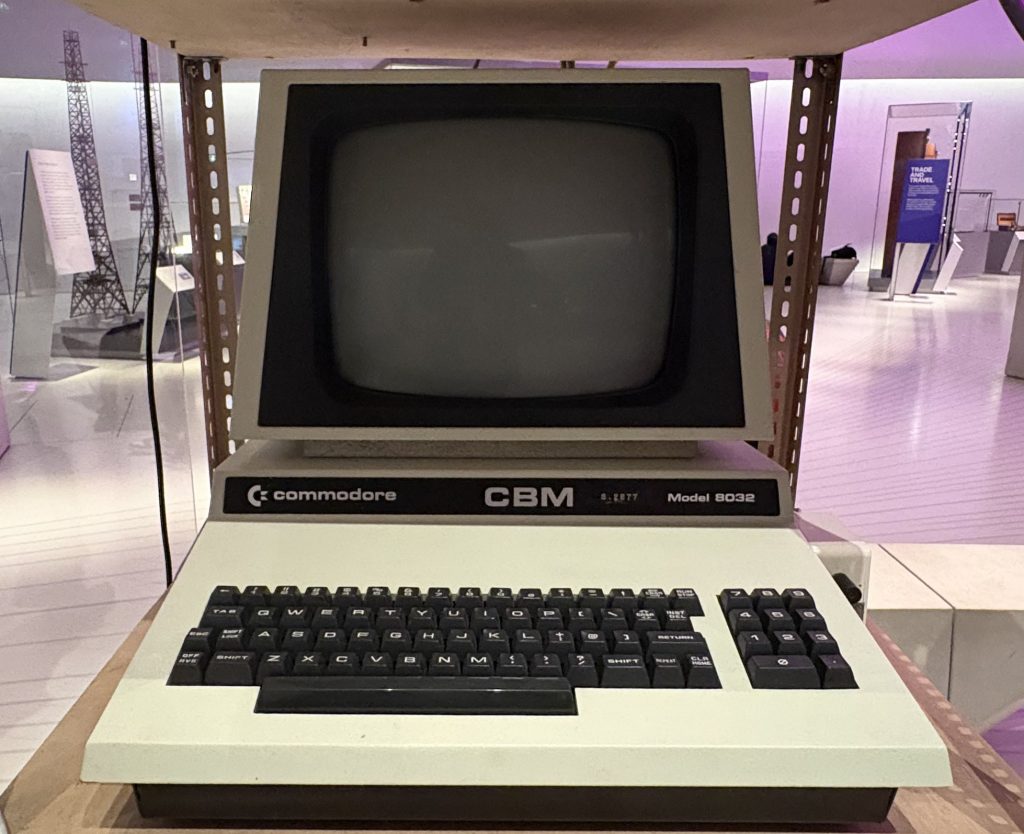
I am also the author of Histoire de l’informatique : du calcul mécanique à l’intelligence artificielle, published in French by Éditions Ellipses.
The book follows the same approach: connecting technological developments with the uses, constraints, and ideas that made them possible.
A growing resource
The site is continuously expanding with new features, thematic articles, portraits, and chronological landmarks. New publications regularly add to this exploration of the technical and cultural history of computing.
Enjoy your visit.
Sébastien Inion
Derniers articles ajoutés
 Commodore 64
The Commodore 64, usually shortened to C64, is one of the most iconic home computers of the 1980s. Commodore unveiled it in January 1982 at the Consumer Electronics Show in…
 Ada Lovelace
Ada Lovelace: Countess, Mathematician and Poet of Science Ada Lovelace occupies a unique place in the history of computing. A British mathematician born in 1815 and the daughter of the…
 Ken Williams
Ken Williams is a major figure in the history of computer gaming. A programmer by training, an ambitious entrepreneur, and the co-founder of On-Line Systems, later renamed Sierra On-Line, he…
 Steve Jobs
Steve Jobs: Apple Co-Founder and Personal Computing Pioneer Steve Jobs was one of the most influential figures in the history of personal computing. As a co-founder of Apple, the founder…
 Bill Gates
Bill Gates: Microsoft co-founder and software pioneer Bill Gates is one of the major figures in the history of personal computing. As the co-founder of Microsoft with Paul Allen, he…
 Charles Babbage
Charles Babbage: from the Difference Engine to the programmable computer Charles Babbage is one of the founding figures in the history of automatic computing. A British mathematician, inventor and scientific…
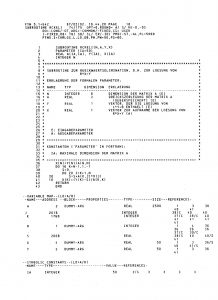 FORTRAN
FORTRAN, short for FORmula TRANslation, is one of the most important programming languages in the history of computing. Developed at IBM under the direction of John Backus, it allowed scientists…
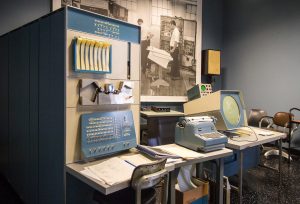 PDP-1
PDP-1PDP-1: the interactive computer that brought Spacewar! to life At the beginning of the 1960s, using a computer still often meant preparing a program, handing it to an operator, and…
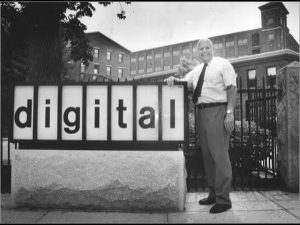 Digital Equipment Corporation
The company that popularised the minicomputer Digital Equipment Corporation, better known as DEC or simply “Digital”, was one of the major companies in the history of post-war computing. Founded in…
 MIT: Birthplace of Hacker Culture and Interactive Computing
MIT: Birthplace of Early Hacker Culture and Interactive Computing In the late 1950s and early 1960s, the Massachusetts Institute of Technology, or MIT, played a decisive role in the history…